
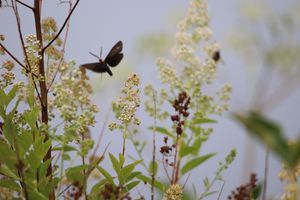
Do you ever spy
something fly by
out of the corner of your eye
that you can’t identify?
I enjoy my morning coffee sitting beside a large window facing the lake, and it’s not unusual to hear me say Wassat? or Who-dis? or even WTF??
Something catches my attention, sends me scrambling for my camera and on a mission to capture an image of the Unidentified Flying Object. (Sometimes they swim, climb or skitter, but I’ll save those critters for another post.)
I’ve had lots of close encounters of the bird kind; but time, patience and better camera gear has drawn me to the myriad of smaller flyers that visit the flora of our wet and woodsy acre.
As a kid, all bees were bumblebees, scary things to be run from not towards. I still maintain a respectful distance from the stingers, but experience has taught me that busy pollinators are not much interested in me.
I’ve learned that there are over 200 species of bees in Nova Scotia and that’s not counting the wasps (who are sons of B’s). I’ve also discovered that many bugs that look like a bee and fly like a bee may not be a bee.
One such UFO darted past the window and disappeared behind the holly bush before I could get a good look at it, but my impression was “That was the biggest bee I’ve ever seen in my life!”
The next time I caught a glimpse of the same fast-flyer, I changed my mind – “That was the tiniest hummingbird I’ve ever seen in my life!”
Finally, one day, I was taking pictures of the beautiful pink and purple phlox blossoms that line the garden steps, and into my lens flew the thing! The bee-bird! And it lingered there long enough for me to take some pictures of it!
Now if you’re a gardener or nature lover, you may have seen and already guessed the identity of this oddity. Turns out they’re not all that rare but not something you see any old day. After looking at the pictures and searching the internet for “Bee that looks like a hummingbird”, the mystery was solved. Surprise - it’s a MOTH! A Hummingbird Moth to be specific, and in this part of the world, a Clearwing Hummingbird Moth to be even more specific. Like the bee, it’s a pollinator, and it loves phlox so that’s what gave me a moment of good fortune.
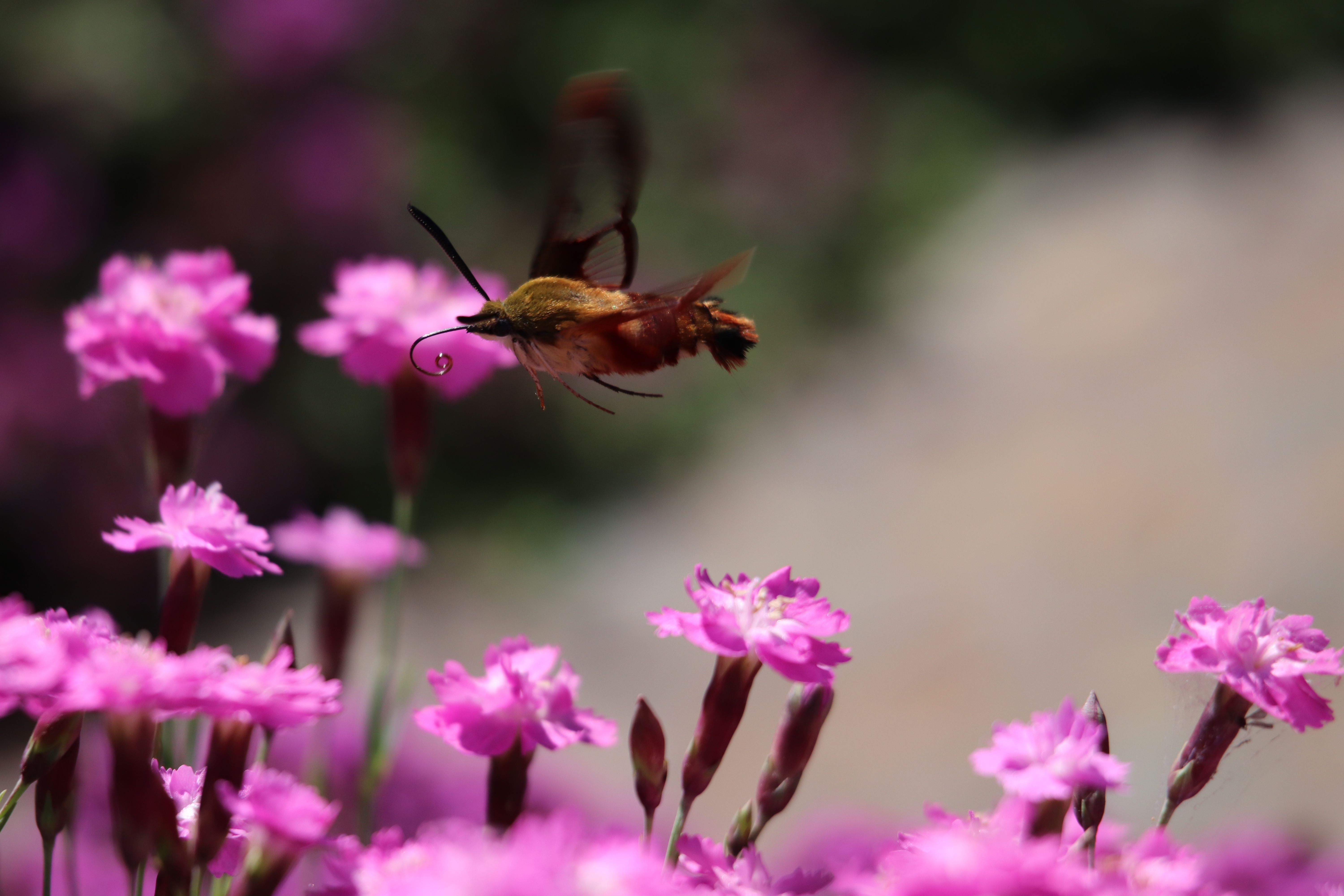
When it's not sipping nectar, it curls its tongue.
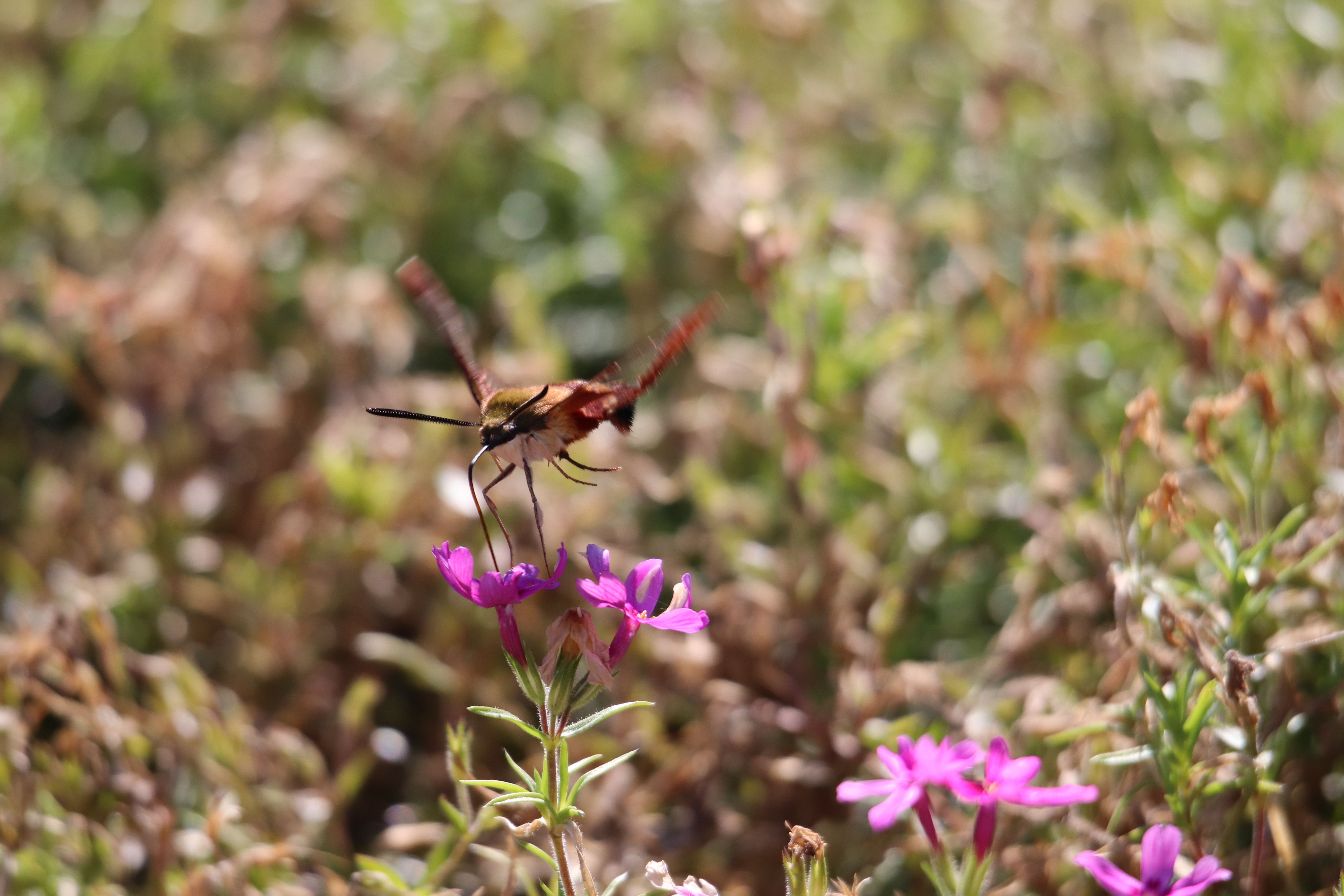
YUMMY!
~~~~~~~~~~~~
I found my second bee that may not be a bee in a crop of meadowsweet at the edge of our lakeside pond. It’s a pollinator magnet! I’ve seen one single blossom loaded with a half-dozen different insects gathering nectar at the same time, creepy in a way but fascinating when you’re up close and personal.
I was zoomed in on a flower and saw a big, bright black and yellow butt that looked like a bee but not like any bee I’d ever seen before. Its face was strange and alien-like, with big black eyes, it reminded me of that old horror movie The Fly (Oh my, that was the scariest thing I’d ever seen at a tender young age – even scarier than bees! Help me! Help meeee!)
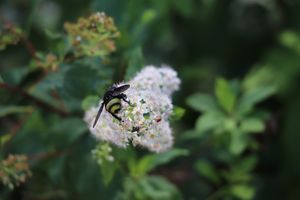
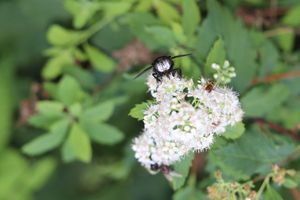
Back to the internet with my photo, to search - Fly that looks like a bee - and second mystery solved. I discovered that it was, not quite as surprising - a FLY! Specifically, a “Belvosia Borealis”, member of the Tachinid Fly Family. Those are the scientific names that are fun to say but basically, A Fly That Looks Like a Bee. You can tell the bees from the flies by their eyes, and also two wings instead of four. Now we know.
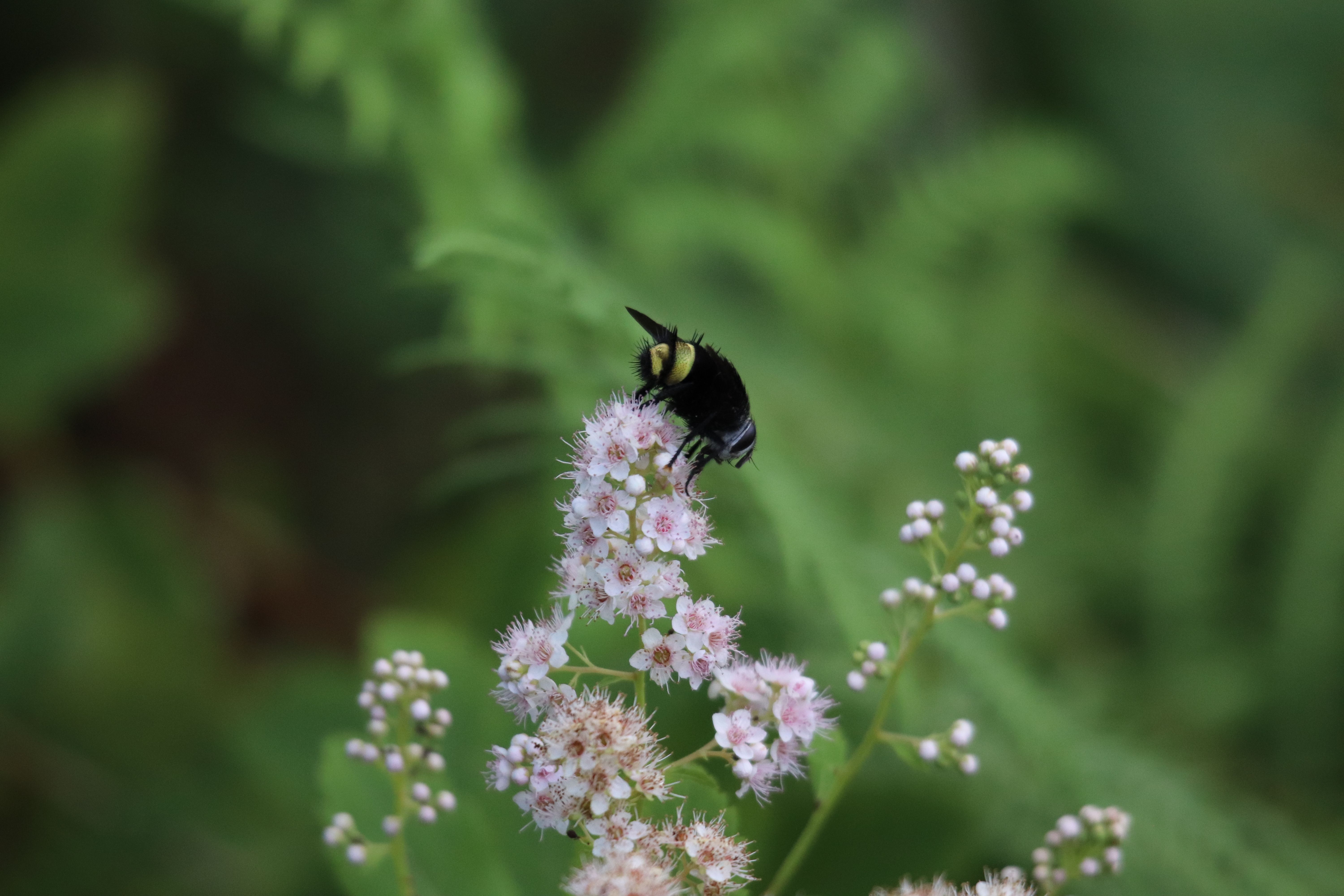
Apparently, some flies figured out it’s a good thing to look like a bee, because not just people are afraid of bees! You may have seen the fairly common hover flies, buzzing at you like little helicopters that look a lot like a wasp, but are not a wasp.
In an interesting and possibly tragic twist, the Belvosia are parasitoids (killers) of the larvae and pupae of the sphinx moth, and the Hummingbird Moth is a type of sphinx moth, but it might not be the right kind of sphinx moth. Is anyone here an etymologist? I want them to bee friends.
~~~~~~~~
Nature gives us so many gifts, we’re rewarded with knowledge and delight simply by being observant, respectful and most of all curious. I’m interested in all the common things that are right in front of my eyes waiting to be discovered, but there’s a special excitement when the unusual drifts into our line of vision when we’re not even looking for them. I’m planting even more pollinator-friendly perennials this year, so whatever decides to fly by, I’ll bee watching!