I’ve got a passion for backyard birding and nature photography. A few years ago I started reading about local endangered and invasive species in forests and wetlands, something to watch for on my nature walks.
It was only last year that I made connections between the specific wildlife that lives here and the plants that grow here. I started thinking in terms of habitat, and resolved to learn more about what I could do within our own spaces to benefit the birds, bees and butterflies.
The hosts who feed, shelter and nurture the native insects and wildlife are native plants. It sounds obvious, I know, but once you start to explore the world of plants in terms of native, naturalized, introduced, invasive, exotic…you might feel like you don’t know your weeds from your wildflowers, and if you’re like me, you’d be right!
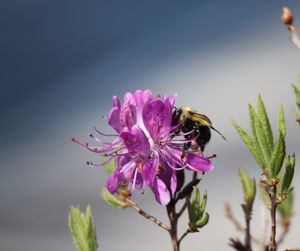
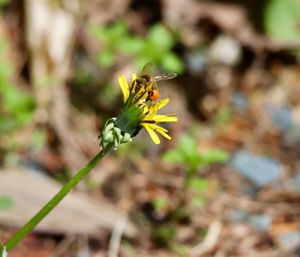
Here’s two pictures of bees on flowers that both bloom in May. Do you know which one is a native bee on a native flower? To mow or not to mow? That is the question. I thought the answer was easy – it’s not!
For novice learners like myself, the good news is that experts and passionate hobbyists are generous sharers of knowledge. The public Facebook group Native Gardening Nova Scotia helped get me started, I liked the sensible approach of its administrator, Marian Whitcomb, and the posts and articles from her and other group members were a springboard to further reading.
There’s lots of geographically-specific information on the internet to help you sort out what’s indigenous to your area - on social media, government agencies, native-focused nurseries and botanical gardens – it’s an online rabbit hole that’s worth exploring! And of course there’s always the library.
I’ve already come to accept that native gardening or restoring habitat can’t be all or nothing for most of us, and it doesn’t need to be. It’s a labour of love (and frustration) where you learn, make mistakes, and do what you can to favour native over non-native plants in areas where it makes sense for you and your surroundings.
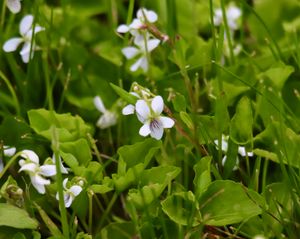
Maintaining a lush green carpet of Kentucky bluegrass has never been the goal here; we’re set back from a rural road, surrounded by woods and wetland, the area we designate as lawn only has to aesthetically please ourselves and occasional guests. With the growth of certain trees and shrubs there’s less sun for the heat-loving weeds, and to paraphrase Erma Bombeck, “the moss grows greener over the septic field”.
I don’t mind moss, it’s pretty shades of green, cushy to walk on, and it’s low. If we had an existing meadow to work with, I might think about expanding that, but we do like some lawn area, and More Low equals Less Mow.
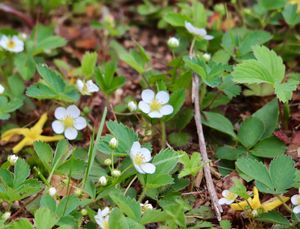
Weeds aren’t inherently ugly, but many of them are tall, and pop back up almost as soon as the mower passes over them. We have violets, and an abundance of wild strawberry - ground creepers that are native, critter-friendly and not unpleasant to look at, so when I can give the good things more room to roam, I try to do that.
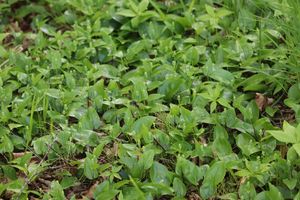
I’ve always believed in working with Mother Nature rather than against her, and that still applies in most situations; however, when people have interfered with Mother Nature ( by design or mistake), it doesn’t hurt to give her a hand fighting back. I try to identify and battle the invasives, the thugs that want to rule the world, have limited value to wildlife and even worse tend to choke out more beneficial plants.
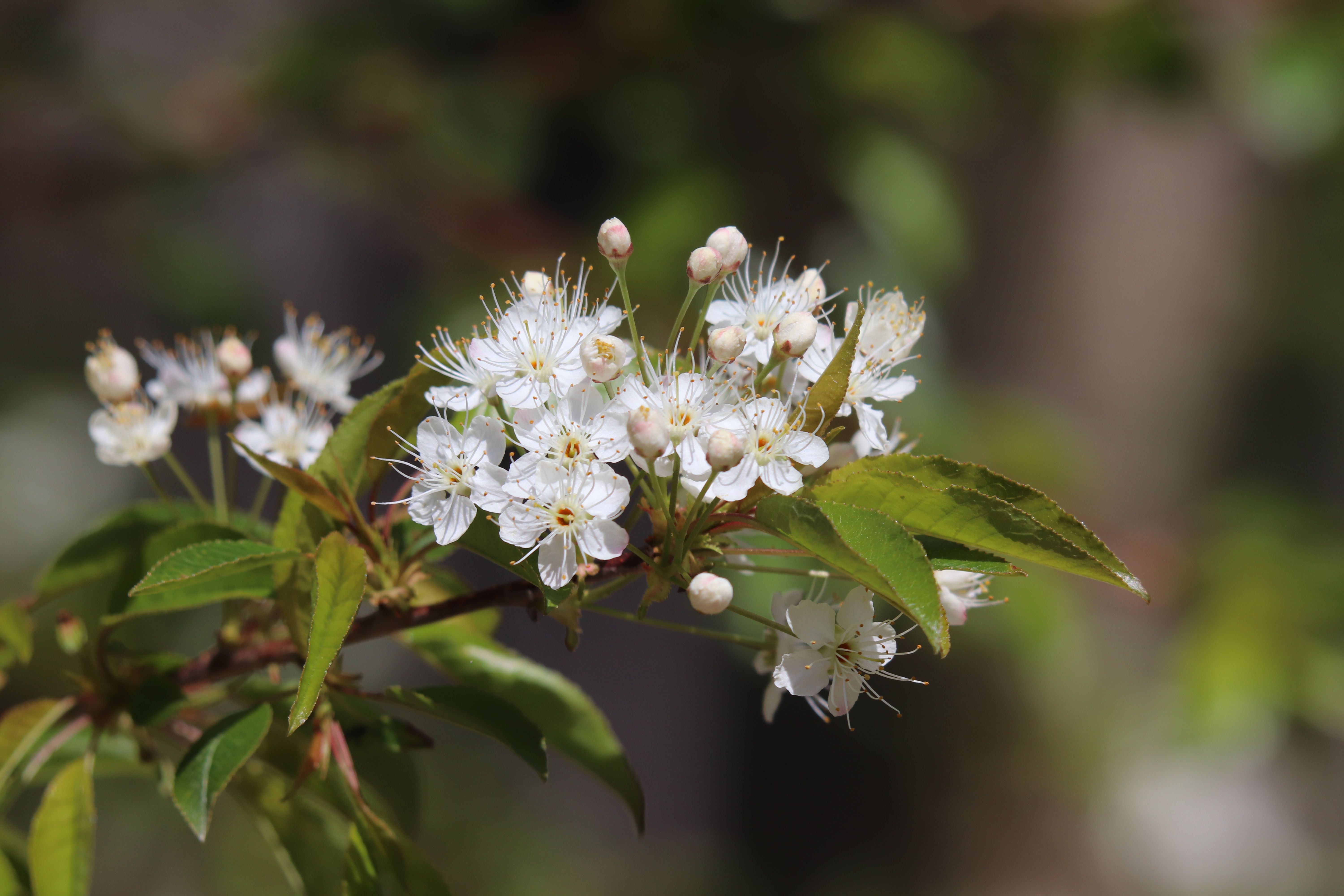
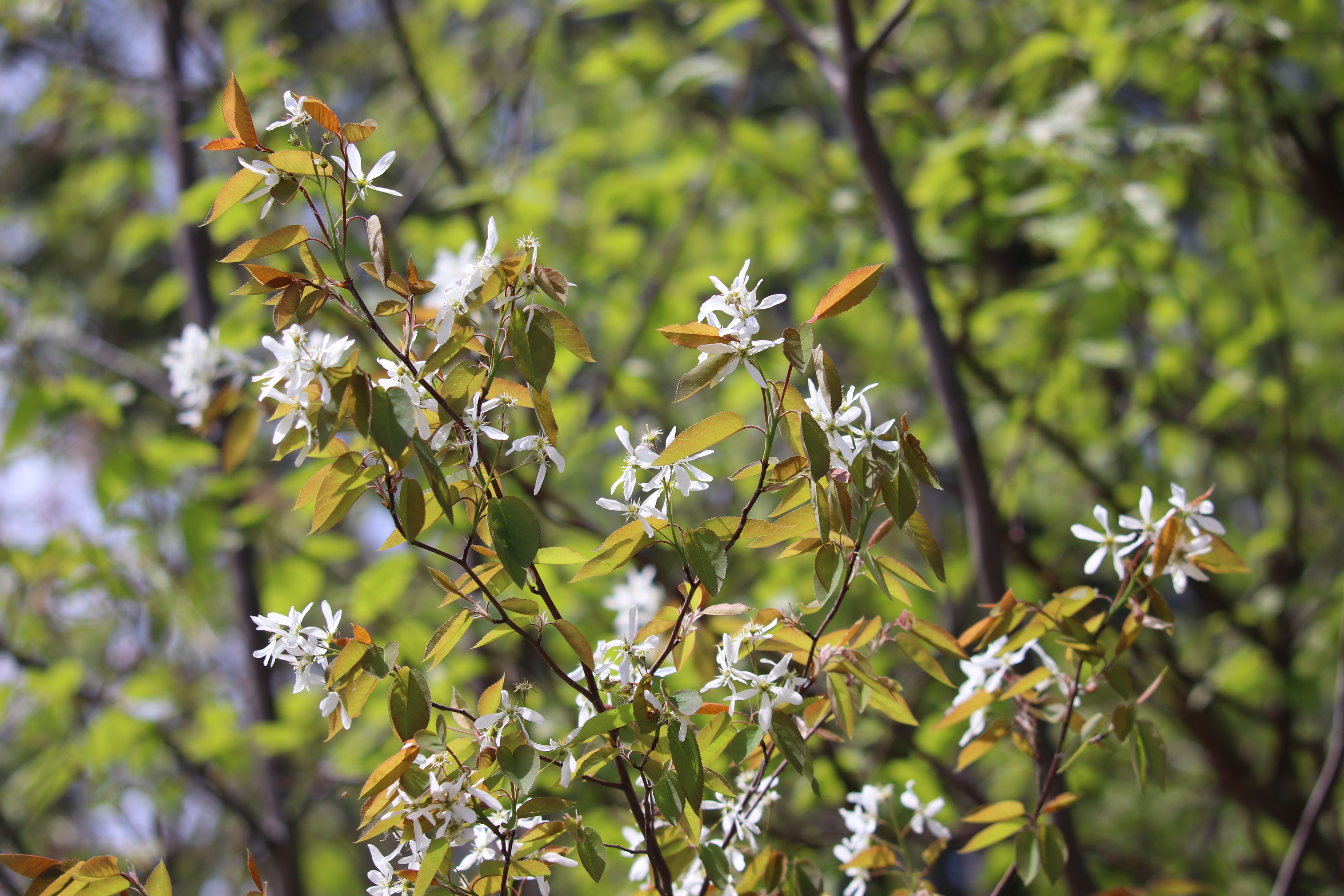
We’ve got many non-native shrubs and perennials growing on our property, some pre-dated us and some planted by me. When it comes to introduced or naturalized plants, many of them still add value to the habitat and are well-behaved. Our large, healthy English Holly feeds the robins in the winter and shelters them in summer, and graces me with beautiful holiday décor, not a problem. Many of the flowering shrubs are pretty and attract birds and pollinators, but for early spring blooms it’s hard to find something more lovely than native pin cherry and service berry bushes that grow happily in poor soil, with nary a care from me.
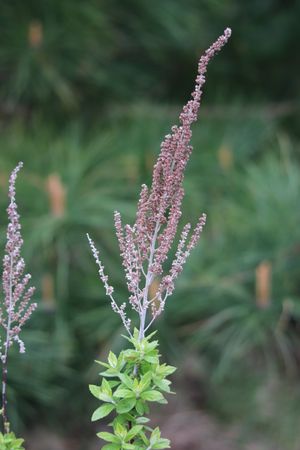
Another new thing for me when it comes to plant and gardening knowledge, is to pay a lot more attention to the scientific names. They don’t roll off my tongue, but if I’m doing an inventory of what’s where on our property, or especially if I’m making a trip to a nursery, now I jot down both the common and scientific names for reference. One example - Spiraea Alba and Spiraea Tomentosa are meadowsweets that grow naturally near the lake and pond. Spiraea Japonica is a flowering shrub, and that one grows…everywhere. Certain pollinators do like both of them but they are not the same. (Refer to wildflower.org for info on the first two, and invasive.org for the latter)
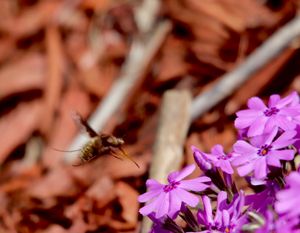
Working with what you have, both native and non-native is part of the challenge (unless you’re starting from scratch), and it’s not a story of good and evil. I likely wouldn’t get to photograph the hummingbird moth if I hadn’t planted the colourful and early-blooming phlox, but I might not have one at all if not for the native wild raisin.
I wanted to favour the Solomon’s seal that was fighting for space with a patch of orange daylilies, so I dug up the lilies and replanted them on a patch of barren, steep slope where they’ll add some colour and help with erosion. And who doesn’t love the colour and beauty of hanging baskets or containers of annuals? (Hummingbird magnets!)
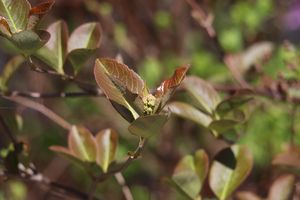
 It’s always a matter of degree, what you can afford in time and money, what you have appropriate space for, and you don't have to do everything all in one year. Using common names for readability, last year I planted Swamp Milkweed, Bee Balm and Turtlehead. This year, I’ve planted a Highbush Cranberry, a Red Twig Dogwood and Joe Pye Weed. Another lesson learned, identify and mark what you put where, because come spring you might not immediately know what’s what.
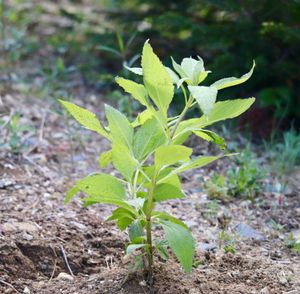
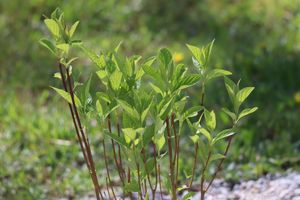
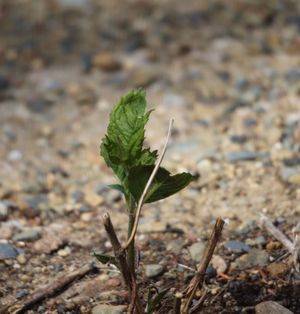
And then there’s the ongoing project of making more conclusive id’s and finishing my inventory of all that grows in the nearby woods and waters. We live in southwestern Nova Scotia, on the doorstep of an area that has so much natural biodiversity, it’s been designated as a UNESCO Biosphere Reserve. Maybe I’ll find an endangered species to protect!
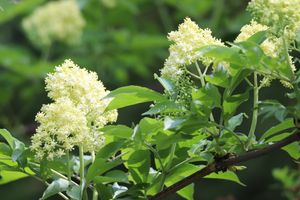
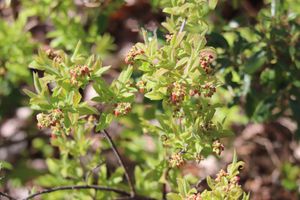
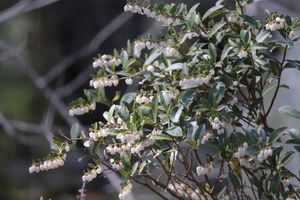
My next goal is to learn more about propagation. Many native plants don’t like to be transplanted, but you can take cuttings and try your luck with those. Part of our natural pond has a disturbed bank, I’d like to make a plan to re-naturalize that some more, perhaps a fall project. And, I’m going to make some blueberry and huckleberry jam in the fall, there’s more than enough of those berries to share!
It’s not my intention to teach or preach, my knowledge and intent is far too limited in scope for either, but perhaps this will plant a seed of interest for someone new. It seems to me that the number of people becoming interested in native gardening is growing like weeds, and that’s a good thing!